
Hot Water Slab Leak Repair in Vacaville, CA
Is your water heater firing nonstop or are you feeling unexplained warm spots on your floor? Hot water lines fail at three times the rate of cold lines due to thermal friction and aggressive water velocity under concrete slabs. We locate and repair hot-side failures quickly.
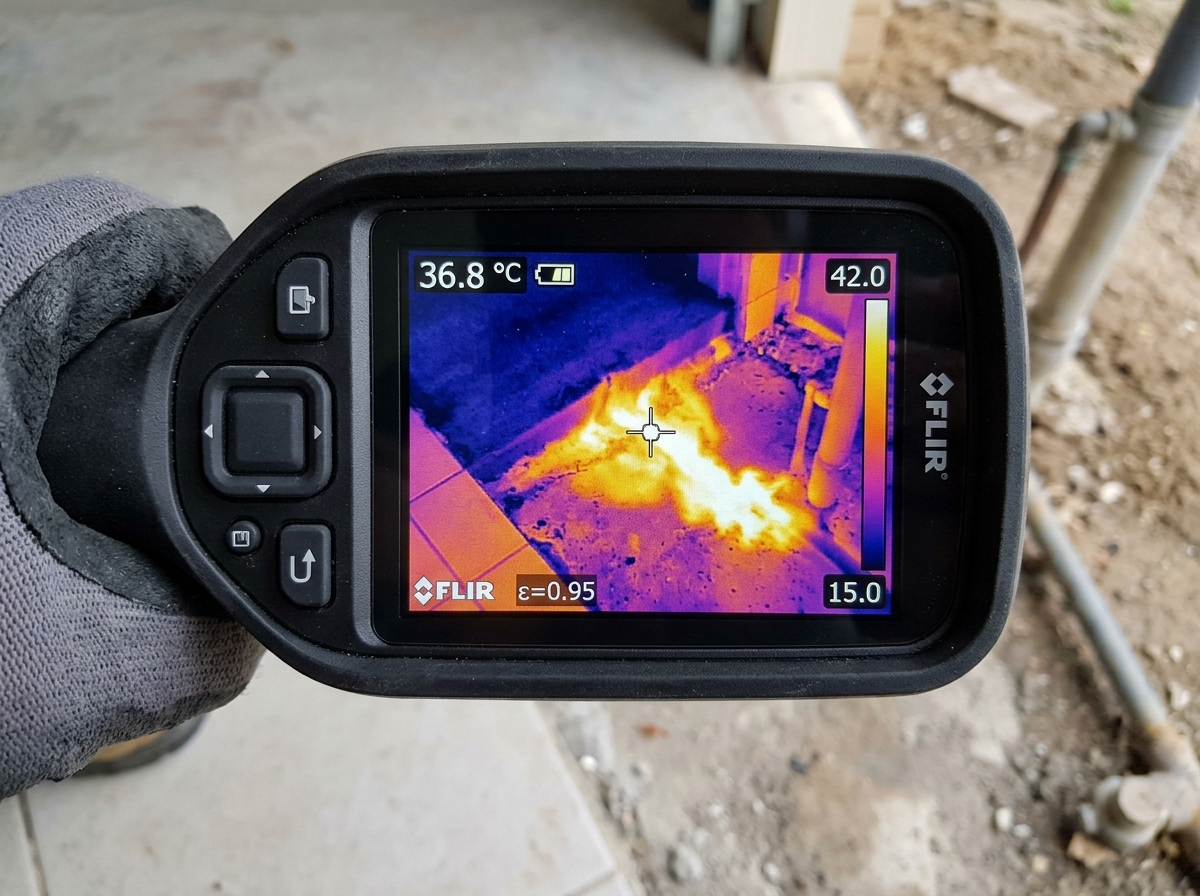
Why Hot Water Lines Fail Prematurely Under Vacaville Slabs
In residential slab-on-grade plumbing systems, the domestic hot water supply lines account for approximately 75 percent of all subterranean plumbing leaks. While cold water lines maintain relatively stable temperatures, hot water lines operate under severe dynamic thermal conditions. When you demand hot water in your kitchen or bathroom, water at 120 to 140 degrees Fahrenheit surges through underground copper tubing.
As copper heats up, it expands lengthwise. When hot water flow stops, the pipe cools down to ambient ground temperature and contracts. Across decades in Vacaville homes—whether in Browns Valley, Southtown, or older tract homes along the I-80 corridor—this continuous expansion and contraction causes buried copper pipes to rub repeatedly against coarse aggregate, concrete burrs, and rocky fill. This mechanical friction, combined with higher water velocity and increased chemical activity at elevated temperatures, causes the copper pipe wall to thin until a catastrophic hot water line leak under slab Vacaville homeowners must resolve occurs.
The Compound Expense of a Hot-Side Leak
A cold water leak increases your water bill, but a hot water slab leak creates a double financial burden. Because heated water is escaping continuously into the ground under pressure, your water heater must fire around the clock to heat incoming municipal water. This causes both your water utility bills and your natural gas or electric utility bills to skyrocket simultaneously while placing immense strain on your water heater tank.
Classic Telltale Signs of a Hot Water Slab Leak
Hot water failures present unique physical indicators that allow observant homeowners to identify problems before foundation cracking develops:
Floor Heat & Energy Warning Signs
- Noticeable warm spot on floor Vacaville homes: Walking barefoot across tile, vinyl, or carpet reveals an isolated, intensely warm patch that does not dissipate.
- Water heater running constantly Vacaville residences: You hear the burner roaring or heating elements humming 24 hours a day, even when no showers, dishwashers, or laundry machines are operating.
- Sudden gas or electric bill surges: Energy consumption jumps dramatically month-over-month due to continuous water heating.
Plumbing Performance Warning Signs
- Diminishing hot water capacity: Showers run lukewarm or run out of hot water rapidly because heated water is continually bled off into the foundation substrate.
- Reduced hot-side water pressure: Water pressure from hot faucets appears noticeably lower than pressure from cold faucets.
- Musty odors & baseboard humidity: Sub-slab steam and vapor migrate through concrete pores, creating localized humidity and mold scents along lower walls.
Diagnostic Protocol: Infrared Thermal Imaging for Hot Leaks
Locating hot-side failures leverages advanced thermography alongside acoustic listening:
Diagnostic Manifold Isolation
The technician closes the cold supply shutoff on top of the water heater and conducts a static pressure drop test. If pressure holds on the cold side but drops on the hot system, the hot-side failure is verified unequivocally.
Infrared Thermal Radiometric Scanning
Hot water escaping under a slab heats the surrounding concrete from below. Using calibrated infrared cameras, the technician visualizes this heat signature on floor surfaces, creating a clear heat plume map directly above the leak origin.
Acoustic Confirmation at the Thermal Center
To eliminate false positives caused by HVAC ducts or sun exposure, the technician applies acoustic ground microphones directly over the thermal epicenter to hear the pressurized water discharge.
Repair vs. Reroute: Choosing the Right Hot-Side Solution
When facing hot water slab leak repair Vacaville homeowners must decide between opening concrete floors or bypassing the line:
Precision In-Slab Spot Repair
Involves cutting flooring, breaking through 4 to 6 inches of concrete slab, excavating soaked subsoil, and replacing the ruptured copper section with a brazed copper sleeve. While viable for single-point mechanical punctures on newer pipes, spot repairs carry risks: disturbing expansive Solano County clay can stress neighboring copper sections, leading to another hot line failure months later.
Dedicated Hot Water Line Reroute (Recommended)
The superior long-term approach completely abandons the leaking copper line beneath the slab. A flexible, commercial-grade PEX hot water line is run from the water heater through interior walls, attic space, or upper floor joists directly to the fixture manifold. Rerouting prevents concrete floor destruction, preserves expensive flooring, and eliminates future under-slab failures on that circuit.
Learn more about non-invasive bypass methods on our Slab Leak Reroute page, or discover how systemic copper deterioration can be resolved permanently with Whole-House Repiping. For full service options, return to our main slab leak repair in Vacaville guide.